Wondering where first-time buyers are actually landing in Nashville right now? You want a home that fits your budget, keeps your commute reasonable, and gives you room to grow. In this guide, you’ll see the neighborhoods new buyers choose, typical price bands, commute patterns, and smart resale factors to weigh. Let’s dive in.
Nashville market snapshot
Nashville saw rapid price gains from 2017 to 2021, followed by a cooler 2022 to 2024 as mortgage rates rose and sales pace eased. Many close-in prices remain above pre‑pandemic levels, but buyers now have a bit more time and options than at the peak. For many first-time buyers, the most affordable choices are condos or townhomes and smaller single-family homes. Expect micro-markets to vary by block and condition, so use these ranges as planning guides.
Typical starter budgets
- Entry condos and townhomes close-in or near-in: about $200,000 to $350,000.
- Entry single-family in emerging or slightly outlying areas: about $300,000 to $450,000.
- Move-in ready single-family in popular close-in spots: often $450,000 and up, with many desirable homes above $600,000.
- Suburban or outlying starter single-family, including new builds in select corridors: about $300,000 to $450,000.
Top neighborhoods for first-timers
East Nashville
- Why buyers choose it: Vibrant food and music, independent shops, and a strong neighborhood identity.
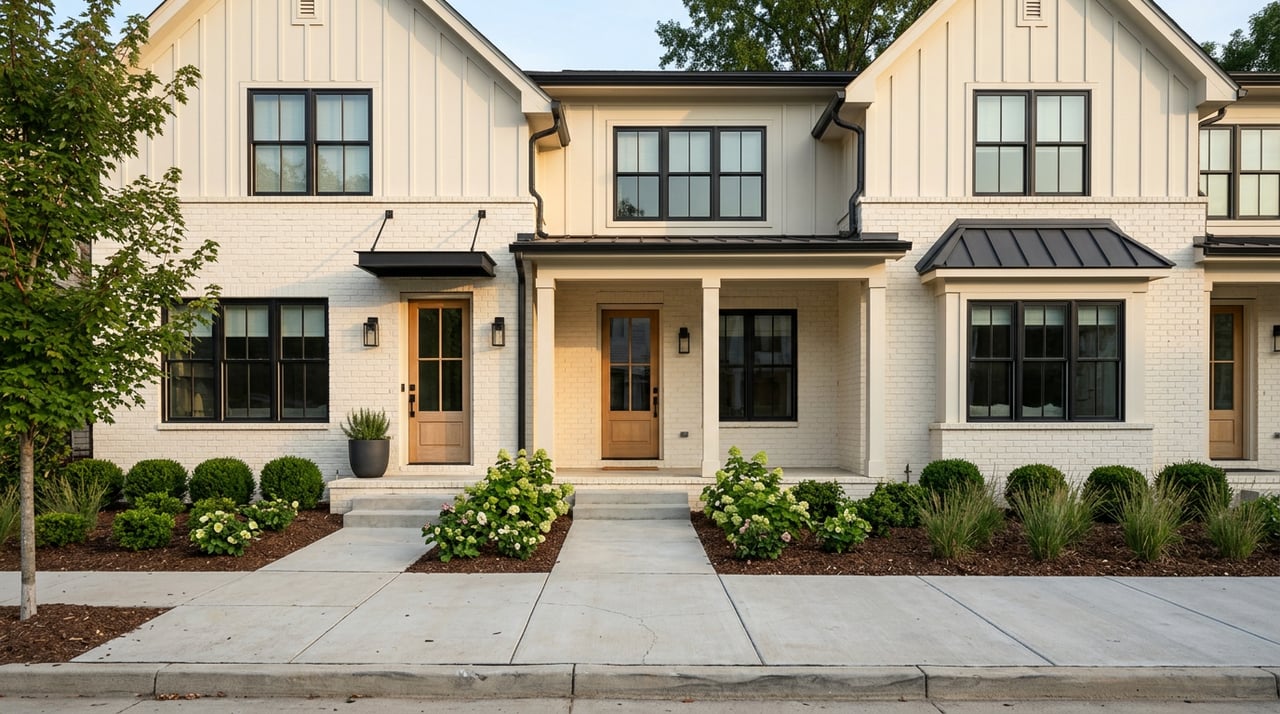
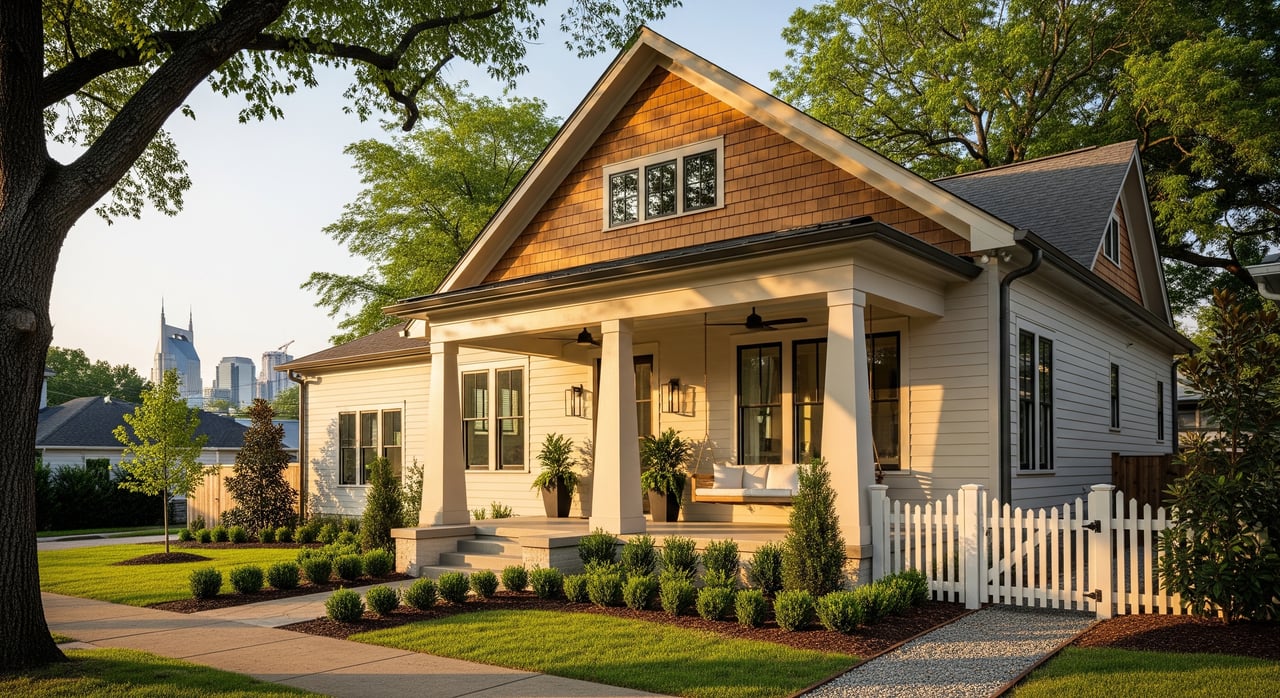
- Housing: Craftsman bungalows, cottages, duplexes, and small infill townhomes.
- Price band: Condos, townhomes, and smaller cottages often in the low to mid $300,000s; renovated single-family commonly $400,000 and up.
- Commute: Quick drive or short bike to downtown or Midtown.
- Resale: Historically strong demand close-in; track infill and HOA trends that can change street character.
Germantown, The Gulch, North Gulch
- Why: Extreme proximity to downtown, high walkability, dense restaurant and brewery scene.
- Housing: Condos, modern low-rise buildings, boutique townhomes.
- Price band: Mid $300,000s and up for condos or townhomes, often higher than citywide starters.
- Commute: Among the shortest drives, plus feasible walk or bike to downtown.
- Resale: High liquidity and limited inventory support values, though entry prices are higher.
12 South, Hillsboro Village, West End
- Why: Trendy retail, parks, nightlife, and strong walkability near Vanderbilt and Midtown.
- Housing: Renovated bungalows, townhomes, some mid-century and infill new builds.
- Price band: Single-family often mid $400,000s and up; smaller condos or townhomes sometimes $300,000 to $400,000.
- Commute: Short drive or bike to Midtown and downtown.
- Resale: Consistently strong due to location near employment and universities.
Sylvan Park, Charlotte Park, West Nashville
- Why: Neighborhood feel with parks and handy commercial nodes, popular with young couples.
- Housing: Bungalows, Craftsman styles, and newer infill townhomes.
- Price band: Single-family starters frequently $350,000 to $550,000 based on lot and condition.
- Commute: Often 10 to 20 minutes to downtown by car.
- Resale: Solid mix of character homes and convenient amenities.
Donelson, Hermitage
- Why: More affordable price points and easy access to the airport, good for car commuters.
- Housing: Mid-century single-family, planned subdivisions, townhomes, and condo complexes.
- Price band: Often low to mid $200,000s up to mid $300,000s for single-family starters.
- Commute: Roughly 15 to 25 minutes to downtown depending on route.
- Resale: Steady demand at practical price points, typically less dramatic appreciation than core neighborhoods.
Bellevue, West Nashville
- Why: Suburban feel and newer developments that offer more space for the money.
- Housing: New single-family subdivisions, ranch homes, and some townhomes.
- Price band: Starter single-family commonly $300,000 to $450,000.
- Commute: About 20 to 35 minutes to downtown, traffic dependent.
- Resale: Often tracks with local school zones and nearby infrastructure or commercial projects.
Antioch, Bordeaux, Southeastern corridors
- Why: Among the most budget-friendly within Davidson County, with active new construction in select areas.
- Housing: New-build single-family, townhomes, and larger apartment communities.
- Price band: Entry single-family often $250,000 to $350,000, with new builds higher based on finishes.
- Commute: Commonly 25 to 40 minutes to downtown in peak times.
- Resale: Mixed, thanks to longer commutes and larger new inventories that can moderate appreciation.
The Nations, North Nashville, Salemtown
- Why: Close-in locations with lower entry prices compared with some core districts, ongoing renovation and infill.
- Housing: Modest bungalows, duplexes, rising numbers of infill townhomes and new builds.
- Price band: Lower-end single-family and renovations commonly $250,000 to $400,000.
- Commute: Short drives to downtown with improving walkability in pockets.
- Resale: Tied to continued investment and infrastructure improvements, with higher upside but block-by-block variability.
Commute and transit reality
Nashville is primarily car dependent outside the core, so many first-time buyers prioritize short drive times or bikeable routes. Close-in areas like Germantown, The Gulch, 12 South, and East Nashville can be 5 to 15 minutes to downtown off-peak. Near-in neighborhoods often run 10 to 20 minutes, while Donelson and Hermitage are about 15 to 30 minutes. South and east corridors like Antioch can be 25 to 40 minutes or more during rush hour.
WeGo Public Transit operates regional buses, though frequency and direct routes vary. If transit matters, focus on homes near frequent lines and confirm weekend or late-night service. Walkability can support stronger resale and a lower car count. Also check parking rules, HOA restrictions, and peak-hour congestion on interstates and major arterials.
Resale potential and risks
- Positive indicators: Proximity to downtown or Midtown, strong walkability and amenity access, constrained lot supply, steady interest from young professionals, and visible investment or infill nearby.
- Risks: Floodplain exposure that can raise insurance costs, oversupply of new construction in a corridor, large projects that may affect traffic or noise, uncertain school ratings, and higher HOA fees that increase holding costs.
- Property features: Lot size and potential for additions or a garage can support future value. For older bungalows, foundation, electrical, and roof conditions are common cost items, so inspect early.
- Rate sensitivity: Close-in neighborhoods with constrained supply tend to be less sensitive to rate swings than outer-ring starter markets.
To assess resale for a specific property, review comparable sales from the last 12 to 24 months, track days on market, check permit history, and review planned infrastructure nearby. Micro-markets differ by block, so evaluate the exact street and nearby activity, not just the ZIP code.
Compare neighborhoods checklist
- Test-drive your commute at the actual times you will travel.
- Confirm school zones and ask about potential rezoning.
- Check flood zone status and any insurance requirements.
- Ask about HOA fees, special assessments, and coverage for condos or townhomes.
- Verify typical utility costs and any city or neighborhood fees.
- Review recent comps and days on market for similar properties.
- Get a general inspection and budget for roof, HVAC, foundation, and electrical.
- Confirm permit history for past renovations.
- Check zoning and any short-term rental overlays or restrictions.
- Ask about bike lanes, bus routes, and road projects planned nearby.
- For condos or townhomes, review association reserves, insurance, and litigation history.
Financing options to consider
- Conventional 3 percent down programs for qualified buyers.
- FHA loans with 3.5 percent down.
- VA loans with zero down for eligible veterans.
- USDA loans for qualifying rural areas, which are rare inside Davidson County.
- Tennessee Housing Development Agency programs that often include first-time buyer loans and down payment assistance, with eligibility requirements that change over time.
- Get a full pre-approval rather than a pre-qualification to strengthen your offer in competitive neighborhoods.
How Parker guides first-time buyers
You deserve a clear plan and a seamless process. With a lending background and deep neighborhood knowledge, Parker helps you match financing to your goals, compare micro-markets, and understand resale trade-offs. You get digital tours, data-backed comps, and an offer strategy that reflects real-time conditions. When you are ready, inspections, permits, and HOA reviews are coordinated so you move forward with confidence.
Ready to see where your budget goes and how to win your first home in Nashville? Let’s connect through Parker Brown and start your Nashville search.
FAQs
What are Nashville’s most affordable starter areas?
- Many first-time buyers look to Antioch, Donelson, Hermitage, and parts of Madison or Bordeaux for entry single-family options in the $250,000 to $350,000 range.
How long is the commute from close-in neighborhoods?
- Close-in areas like Germantown, The Gulch, 12 South, and East Nashville often run 5 to 15 minutes to downtown off-peak, with longer times during rush hour.
Are condos or single-family homes better for resale?
- Close-in condos can offer strong liquidity but HOA fees matter, while single-family homes in constrained, walkable areas often see steady demand at higher entry prices.
What should I check about flood risk before buying?
- Verify whether the property is in a flood zone, understand insurance needs and costs, and review any past flood history or mitigation work.
How walkable are the most popular neighborhoods?
- Germantown and The Gulch top the list for walkability, and pockets of East Nashville and 12 South offer bikeable access to dining and entertainment.
Which loans help first-time buyers with low down payments?
- Conventional 3 percent down programs, FHA at 3.5 percent, VA for eligible veterans, and THDA options are common pathways, with USDA available in select outlying areas.